Automation is getting good enough that no part of the workforce is safe from it. We’re heading for a world with barely any work left in it, where millions of people are pushed out of the economy for good as whole categories of job get shrunk, reorganised or deleted. The machines were supposed to do the boring parts and hand us back our evenings. What they’ve actually done is push wages down and make people’s livelihoods precarious.
You’ve read something in that shape this week, probably several times, in your feed, from someone with a newsletter.
That passage is my summary of a book called The End of Work. It came out in 1995, written by an economist about computers and corporate re-engineering, looking at factories and back offices decades before you could open a language model in a browser.
I like that reveal more than I should. All it shows is that the shape of the worry is old, that it gets refilled with whatever technology is currently frightening, and that a lot of people had their answer ready before they looked at this one.
And the room I spend more of my time in has its own answer, arrived at just as early.
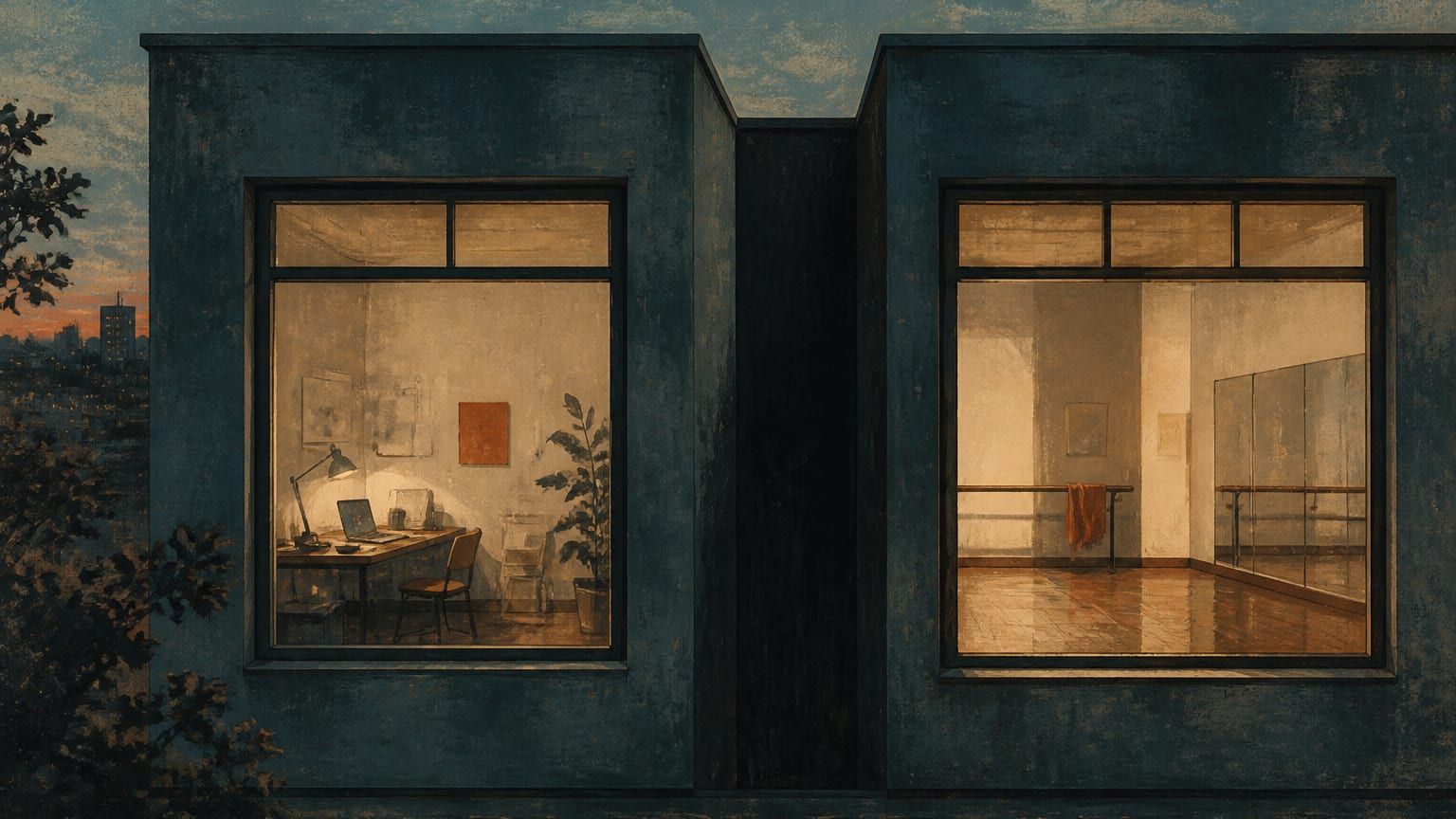
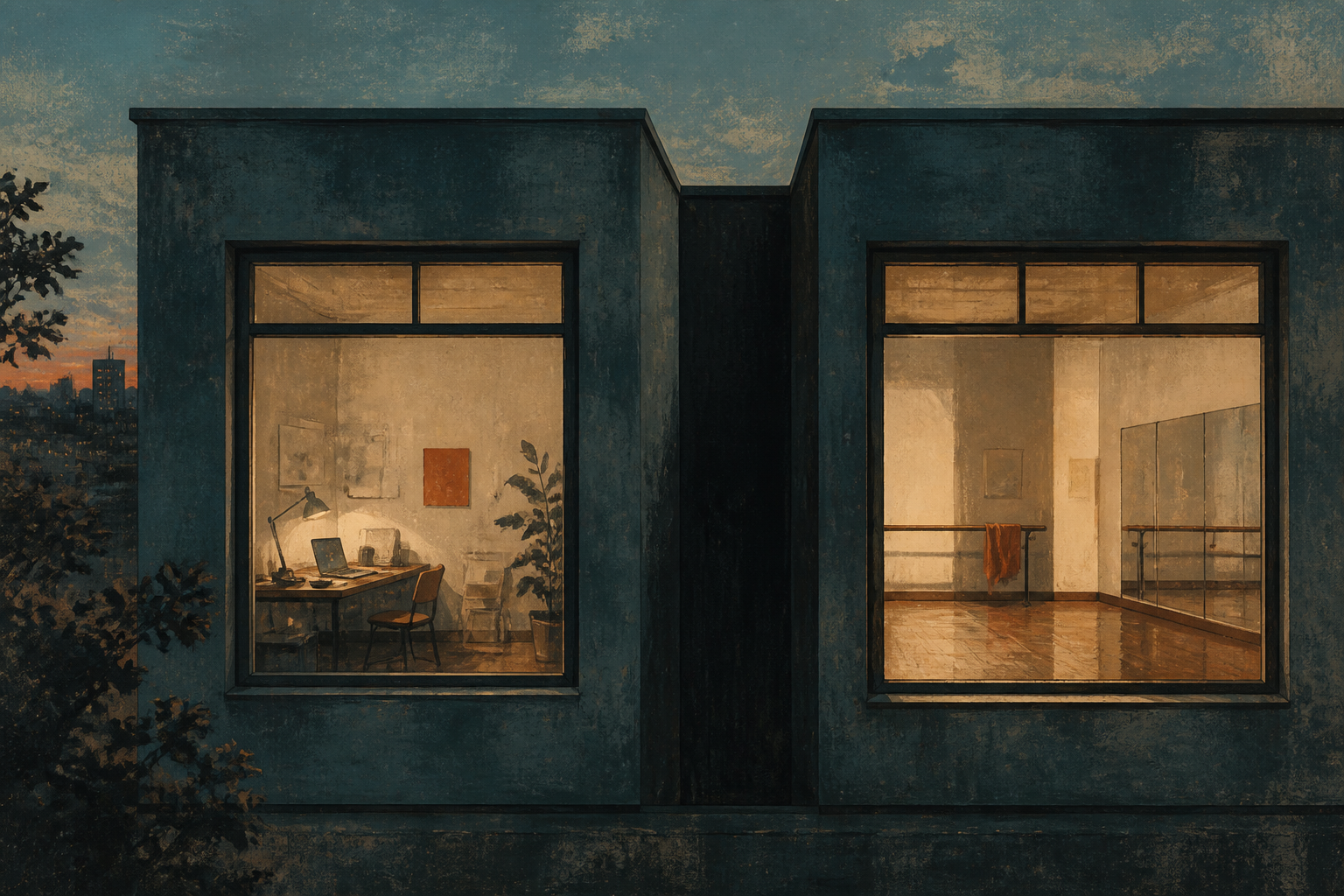
Two rooms
I’ve spent a lot of time in AI enthusiast circles. I didn’t set out to become an AI person. I got curious and stayed, and now a good share of the people I talk to about this are people who build with it. That room is full of people who are certain it changes everything. The certainty is comfortable, and very hard to see from the inside.
The other room is a dance studio. I taught and choreographed for about seven years, which is the part of my life that had nothing to do with my career. It’s where I learned what craft is worth, and what it takes to hold a vision and see it through. It’s also where I found out how much thirty people can do when they’re all pulled towards the same thing, and how little of that survives if you treat any of them as interchangeable.
Most of the dancers and choreographers I still talk to want nothing to do with this. They’ve tried the tools, so they aren’t objecting from ignorance. They object on exactly the grounds the studio taught me to take seriously. They ask whether a thing made this way belongs to anybody at all.
I sit in both, and neither knows what the other sounds like. The studio thinks the builders have been sold a product. The builders think the studio is frightened of change. Both are describing somebody who isn’t in the conversation.
Both rooms come with the answer already in them
The worry about work disappearing is at least thirty years old in the form I read out. The noun keeps changing and the worry stays where it is.
The other room has its own version, and I know it better because I live there. There’s a rush of people announcing expertise, and a steady run of posts about the thing somebody built in an afternoon, always stopping just before the part where you find out whether it held together.
The tools move to the same rhythm. For a while everyone I followed was on Cursor, then everyone was on Claude Code, with the posts staying the same and only the tool changing.
The writing gives it away too, and once you’ve noticed, you can’t stop. It’s not this, it’s that. But here’s the kicker. Here’s what nobody’s talking about. It quietly compounds. The tell has very little to do with whether somebody used AI to write it. It’s that the shape arrived before the thought did, and the machine was happy to fill in the middle.
That’s the appeal of a room. You don’t have to look at the thing in front of you. Somebody says AI, you already know what you think, and it feels like having a view when it’s closer to being spared the work of forming one. The feeds help, since whichever side you land on, you’ll be shown more of it until the other room stops sounding like people at all.
What the comfort costs
What’s changed in the last couple of years is the distance between deciding to attempt something and having a plausible first version of it. A business analyst could always have prototyped, and a designer could always have learned to query data. It cost enough time that most people didn’t. Now it costs an afternoon. I think that’s good. It moves the difficulty onto whether this was the right thing to attempt at all, and whether the confident version on the screen is actually true.
Judgement is a muscle, and it gets built slowly, out of watching what happened after you decided something. It wastes differently from the ones you can see. Skip the gym for three months and you’ll notice. Skip the thinking for three months and you won’t, because a firm opinion covers the gap nicely.
That’s what settling into a room costs. If you’ve decided the whole thing is a scam, you never have to assess whether it fits this particular problem. If you’ve decided it’s inevitable, you never have to check the output, and the output will usually sound right whether or not it is. These models are agreeable, and what they produce is plausible almost by default. Plausible is very hard to argue with at four in the afternoon.
The person who forwards the output as truth and the person who won’t open the tool at all do very different amounts of damage, and I’d rather work near the second one. But neither has looked at the case in front of them, and only one of them gets called principled for it.
Which room am I actually in
I argue with whichever room I’m standing in.
In the studio I end up defending the technology. I explain what it can do, and I’ve caught myself reaching for that 1995 book as though it settles something, when it settles nothing. That book is about jobs disappearing. What the studio is actually saying to me is that a thing assembled out of everybody else’s work might not belong to anyone. Those are two different arguments, and the age of the first tells you nothing about the second. I reach for it anyway, because it’s the move I have ready. That’s the whole thing I’ve spent this essay complaining about.
Then I’m back among people building with it, raising objections about ownership and craft and asking who ends up holding the thing when it goes wrong. There I sound like the sceptic in the corner.
I’d like to call that judgement. It might be closer to the reflex of somebody who gets uncomfortable in a room where everyone agrees, and from the inside those feel exactly the same.
Each room also skips something, and the blind spot is always easier to spot from the other room. The studio tends to skip how useful this is, and refusing to look at it closely leaves you unable to argue about it with any precision. The builders skip something simpler. Sometimes this technology really does take the job. I’d want the specifics before accepting any company’s stated reason, in either direction. But some of those layoffs are exactly what they look like, and I’d be careful with anyone who tells you otherwise.
The cost of moving between them is that my judgement gets lazier in a way I only notice later. There were weeks where I leaned on the tools and stopped checking. It has a specific feeling, like reading a page and getting to the bottom having taken nothing in. Nothing broke. The work went out and it was fine, and nothing at any point forced me to notice.
The people in neither room
Both rooms are full of people whose job involves having opinions about technology, and I keep coming back to who that leaves out.
It leaves out anybody who isn’t technical, or who’s elderly, or who has never had a reason to learn how a language model behaves. Someone like that gets a phone call in a voice that sounds exactly like their son asking for money. Families are inventing passwords for exactly this, which is a strange conversation to have to start.
What those people need is somebody who’ll look at their one specific situation and explain plainly what’s happening in it. A position is no use to them at all. The only people equipped to give that are the ones who understand the technology, and they’re busy sorting themselves into rooms and swapping assessment for a side. I haven’t seen much coming out of either room that would help them. Knowing the whole thing is evil doesn’t tell you whether the voice on the phone is real at seven in the evening, and neither does knowing it’s inevitable.
When somebody asked me what the real risk was, I said it divides us, and I meant that more literally than it probably sounded. The arguing is visible and everyone can see it happening. The sorting happens without anyone deciding to do it.
I don’t have this solved for myself either. Belonging to one of these rooms properly would be easier than what I’m doing, because a side comes with people in it. There are weeks where I can feel the pull of picking one and being done with the question.
What stops me is that the sorting was never real in the first place. I don’t know anyone who holds a matched set of views on anything else in their life, and I can’t see why this would be the exception. I care about craft and ownership, and about a person’s hand being visible in their own work. I also find these tools useful, and I use them most days. Those two things sit together in me. They only look like a contradiction from inside a room where everyone has already chosen. The choosing is something the room wants. I’m less convinced it’s something I need.
So I’d rather keep the version of this that’s actually mine, worked out one question at a time, even though it’s less comfortable and comes with nobody in particular attached to it. I’ve managed that so far. I don’t know whether I’ll still be doing it in a year, because being the odd one out in both rooms is tiring in a way that picking a side isn’t.