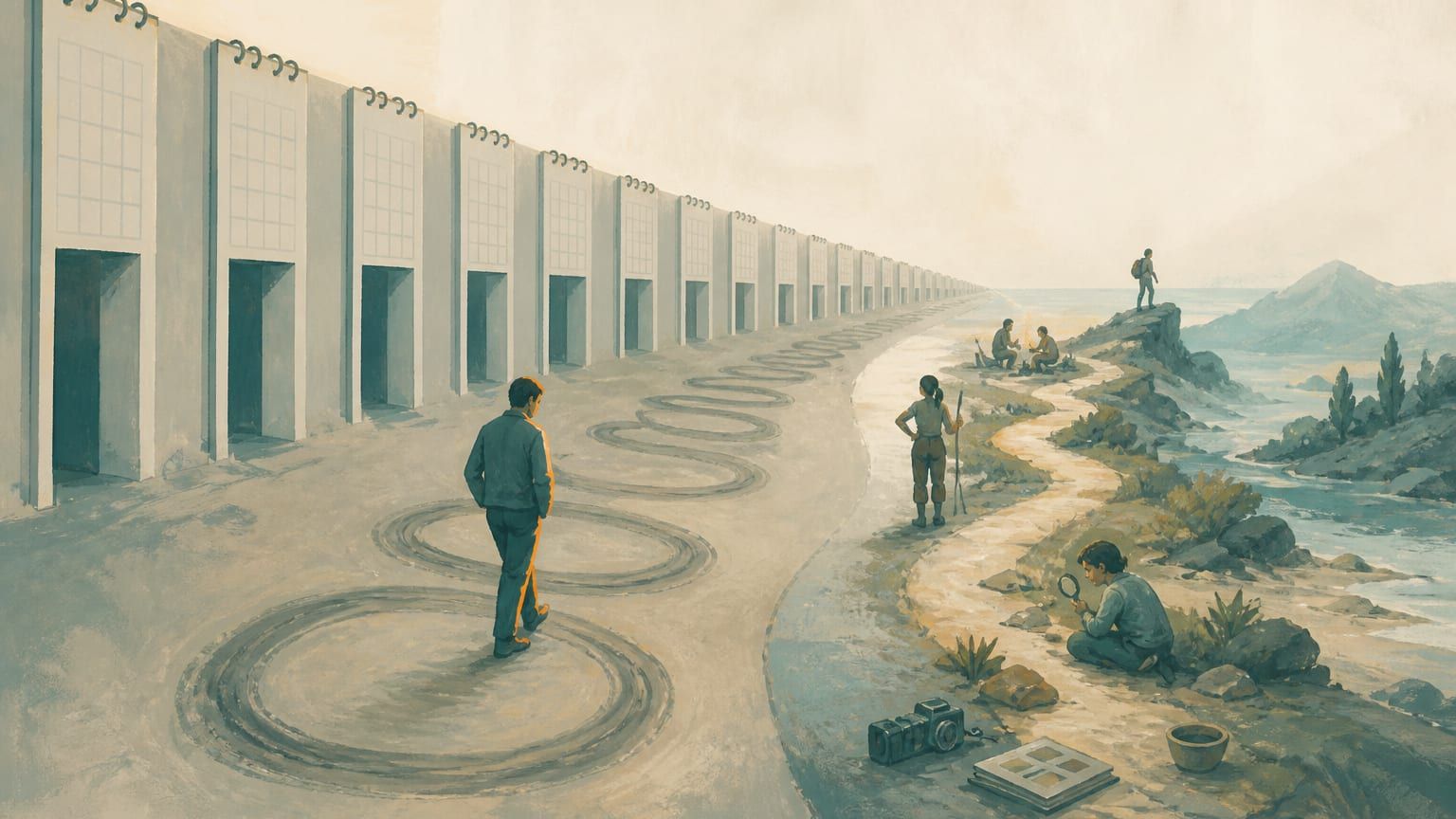
I used to think experience was a function of time. Ten years means something. It’s on the CV, it’s in the salary band, and it’s how the industry sorts people into rooms.
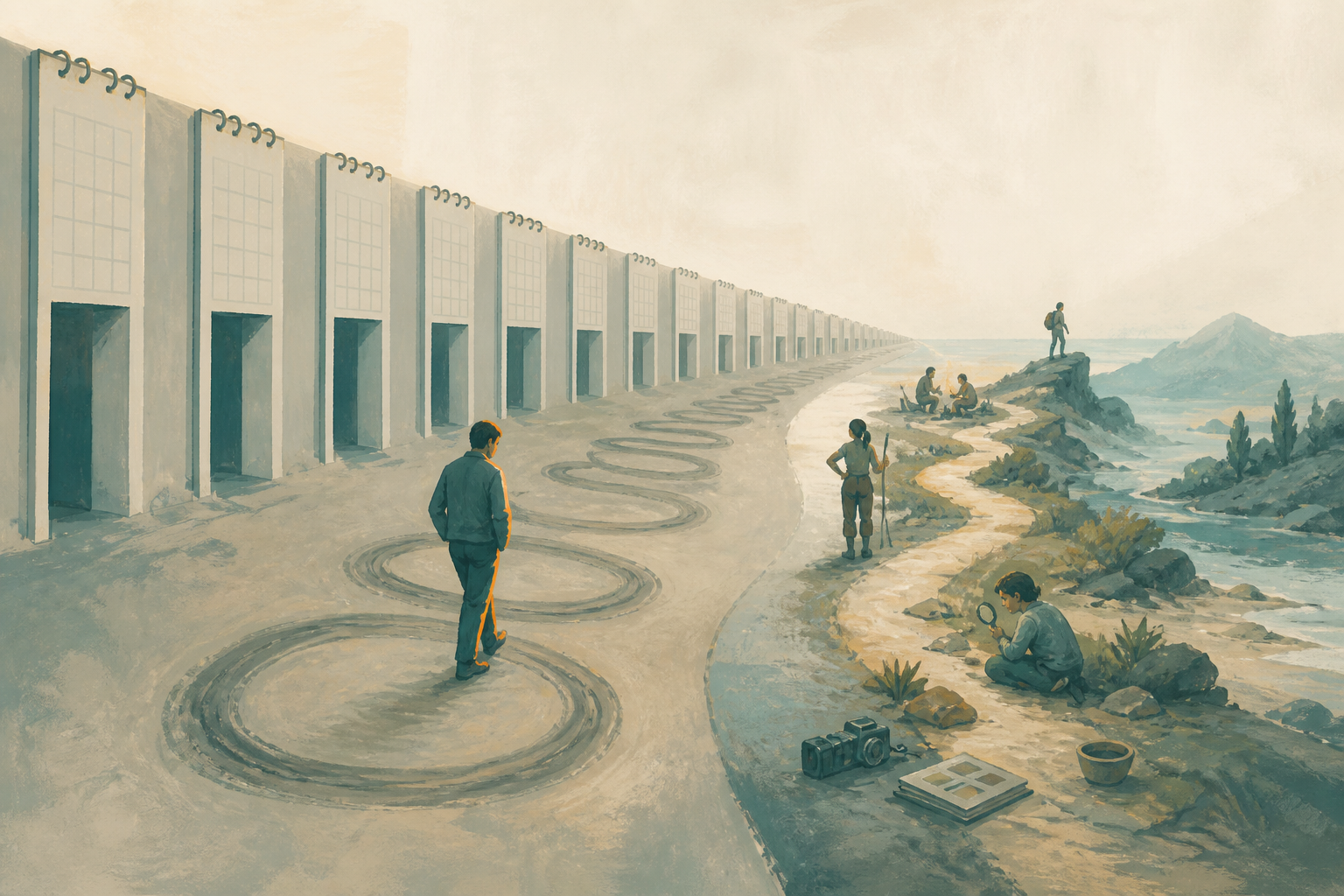
Then I met people with ten years who couldn’t handle anything outside their routine, and people with two years who’d been through more than most get through in a decade. If it isn’t time, the sorting mechanism is measuring the wrong variable. So I started paying attention to what the difference actually is.
Two shapes, the same result
The first is staying somewhere comfortable for a long stretch.
When you’ve been in one place for ten years, you know what’s coming. The same problems arrive every quarter and you already know how they resolve. Attention drops, because attention is expensive and the environment stopped rewarding it. You run the thing that worked last time, and it works again, because the situation is the same. Then something new arrives and there’s nothing to reach for.
The second looks like the opposite. Five jobs in five years reads as impressively varied on paper, and often that’s true. You saw five environments.
But you’re never anywhere long enough to meet the complexity that only shows up later. You build things, make calls and leave before you’ve had to maintain any of it. You skip the hardest part, which is living with your own decisions long enough to learn whether they were any good. Breadth is valuable, but it doesn’t produce the same thing.
Both come down to comfort. One stayed where it was safe, and the other left before it got hard.
What dense experience sounds like
People with real experience can point to specific moments that changed how they think. People with years talk about how long they’ve been there.
That’s the tell, and it’s consistent across every industry I’ve had contact with.
The dense ones say things like “I rebuilt a failing project, and here’s what broke eighteen months later, which I didn’t see coming”. Or “I made a call about the data model that turned out to be wrong. Here’s how I know, and here’s what I do differently now”. They’ve been in situations that came apart. Requirements were unclear, stakeholders wanted opposite outcomes, and systems failed in ways nobody planned for. And they stayed long enough for the feedback to arrive.
That’s where judgement comes from. It isn’t difficulty itself, which is the version of this idea that gets used to justify a lot of unnecessary suffering. It’s the loop closing on you, while you’re still standing there.
The mechanism, and why the industry misses it
Once you see it as a feedback loop rather than a duration, a few things make sense.
It explains why some people get very good very quickly. They weren’t more talented. They were placed, usually by accident, somewhere consequences came back to them fast and clearly. Small companies do this by default. Large ones often don’t, because the result of your decision lands in another department eighteen months later and gets credited to something else.
It also explains a failure I’ve seen in people with long tenure. If you spend a decade making decisions whose outcomes you never see, you build confidence without calibration. That’s worse than uncertainty, because it doesn’t prompt anyone to check.
And it explains why leaving too early is expensive in a way that’s invisible on a CV. The maintenance period, the boring part full of consequences you’d rather not own, is where the learning lands. Skipping it feels like efficiency.
The check
Both paths are tempting, which is why so many people are on one of them. Staying is comfortable and moving is exciting, and neither is wrong.
So here’s how to find out where you stand. Can you describe a specific failure and what you took from it? I don’t mean “that period was hard”. I mean which decision you personally made that turned out wrong, and how you found out. And if you’ve moved around a lot, can you point at something you built and say what happened to it six months later?
If you’re drawing a blank on both, you may have years rather than experience. Treat that as information, and you can act on it from tomorrow. The correction is to stay somewhere long enough to be wrong in public, and watch what happens.
Real experience comes from staying uncomfortable. It comes from taking the ambiguous problems where you don’t have the answer, and sticking around long enough to find out whether you were right.